
AI Rock Music Prompts for Indie, Punk and Alternative Rock
Write AI rock music prompts with clear guitar tone, drum feel, band roles and section movement, plus eight editable examples.
A prompt that says only “rock” does not tell the band how to play. A dry indie verse, a fast punk track and a slow post-rock build may use similar instruments, yet they depend on different guitar textures, drum motion and section contrast.
Choose one rock setting, assign jobs to the guitars, bass and drums, then describe how the energy changes. The examples below are original working templates, not guaranteed outputs.
Choose the rock setting before naming instruments
Start with a subgenre and a playable situation. “Tight garage punk” gives clearer information than “energetic rock,” while “patient post-rock build” changes the expected pace and arrangement shape.
Tone words become useful when they are tied to a role: a muted guitar holds the verse pulse, a wider distorted pair opens the chorus, or a single lead line answers the vocal.
- Feel: straight driving eighth notes, loose backbeat, half-time weight or gradual build.
- Guitars: clean arpeggio, dry crunch, fuzzy power chords or spacious delay.
- Band roles: bass locks to the kick, drums control the lift, lead guitar answers rather than fills every gap.
- Movement: restrained verse, wider chorus, short break, final return and a defined ending.
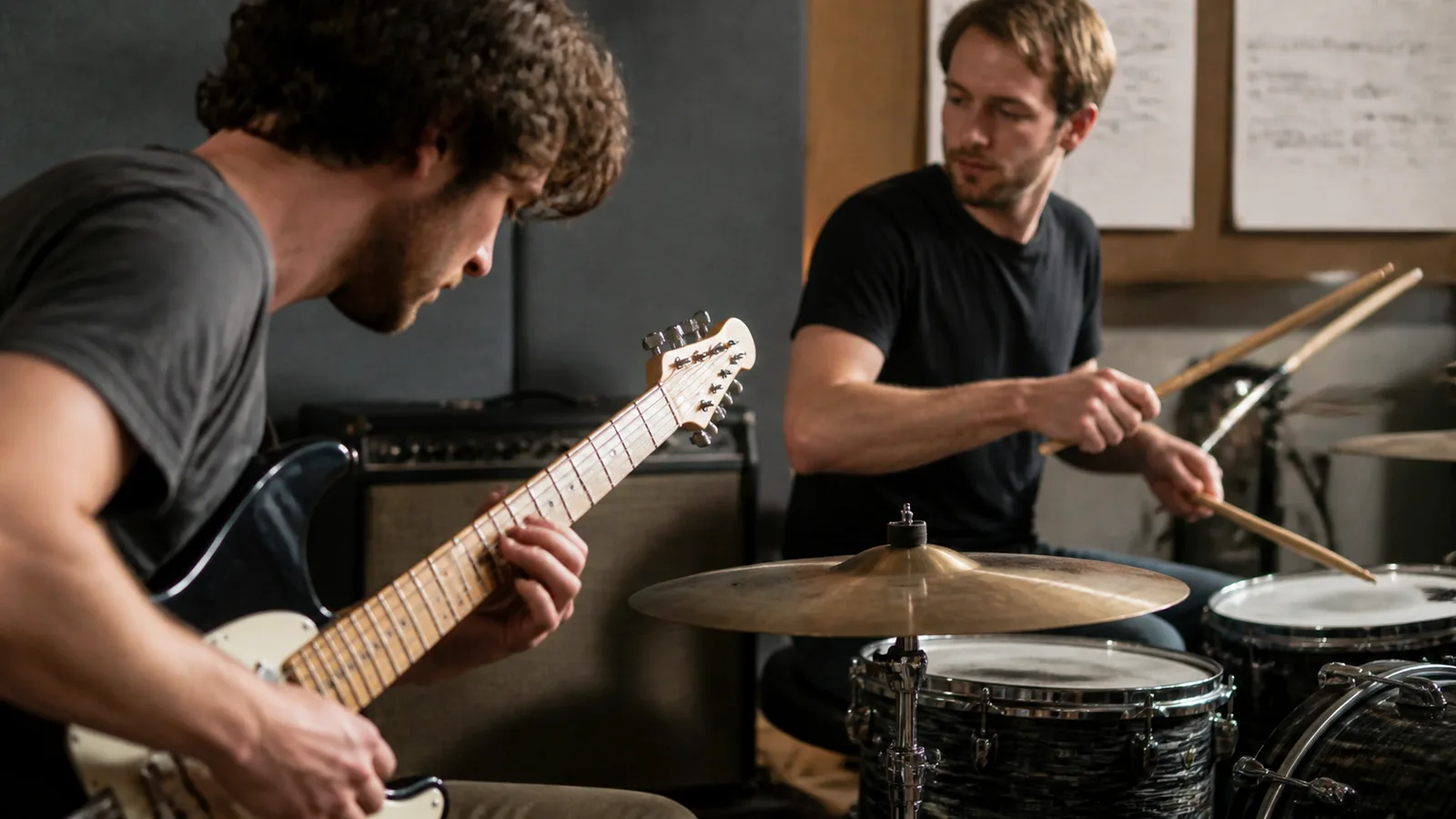
Build a rock prompt around the rhythm section
Write what a listener can verify. Genre, tempo and instruments establish the frame; roles, contrast and ending describe the performance.
Editable AI rock music prompt examples
Indie and alternative rock
Keep the verses selective and decide exactly what becomes larger in the chorus.
Indie and alternative rock
1. Mid-tempo indie rock, dry close drums, warm bass and one clean chiming guitar in the verse; the chorus adds a second crunchy guitar and broader cymbals, conversational lead vocal, short unresolved ending. 2. Moody alternative rock at 92 BPM, palm-muted guitar and tense bass-led verse, heavy open chords only in the chorus, compact tom fill into the bridge, controlled vocal that grows without shouting. 3. Garage rock trio, loose human backbeat, clipped fuzzy guitar riff and active bass, short call-and-response vocal phrases, no polished layers, abrupt final band hit. 4. Dreamy indie rock, clean arpeggio with subtle modulation, rounded bass and restrained drums, chorus widens through sustained guitars rather than extra speed, brief melodic outro.
Punk and post-rock
Punk needs concise momentum; post-rock needs a clear path from restraint to density.
Punk and post-rock
5. Fast melodic punk, 176 BPM, tight downstroke guitars, bass follows the root but walks into transitions, punchy snare, compact verse and immediate singable chorus, two-bar stop before the final chorus. 6. Raw post-punk, angular clean guitar, dry bass-forward mix and rigid drum pulse, detached low vocal, chorus changes harmony without adding many layers, cold stop ending. 7. Instrumental post-rock, slow 6/8 pulse, single clean guitar motif and sparse floor toms, bass enters after the first build, distortion arrives in one controlled wave, theme returns quietly after the peak. 8. Heavy desert-rock groove, mid-tempo swung riff, thick bass doubles only the main figure, roomy drums and a restrained guitar solo, breakdown removes one guitar before a decisive final riff.
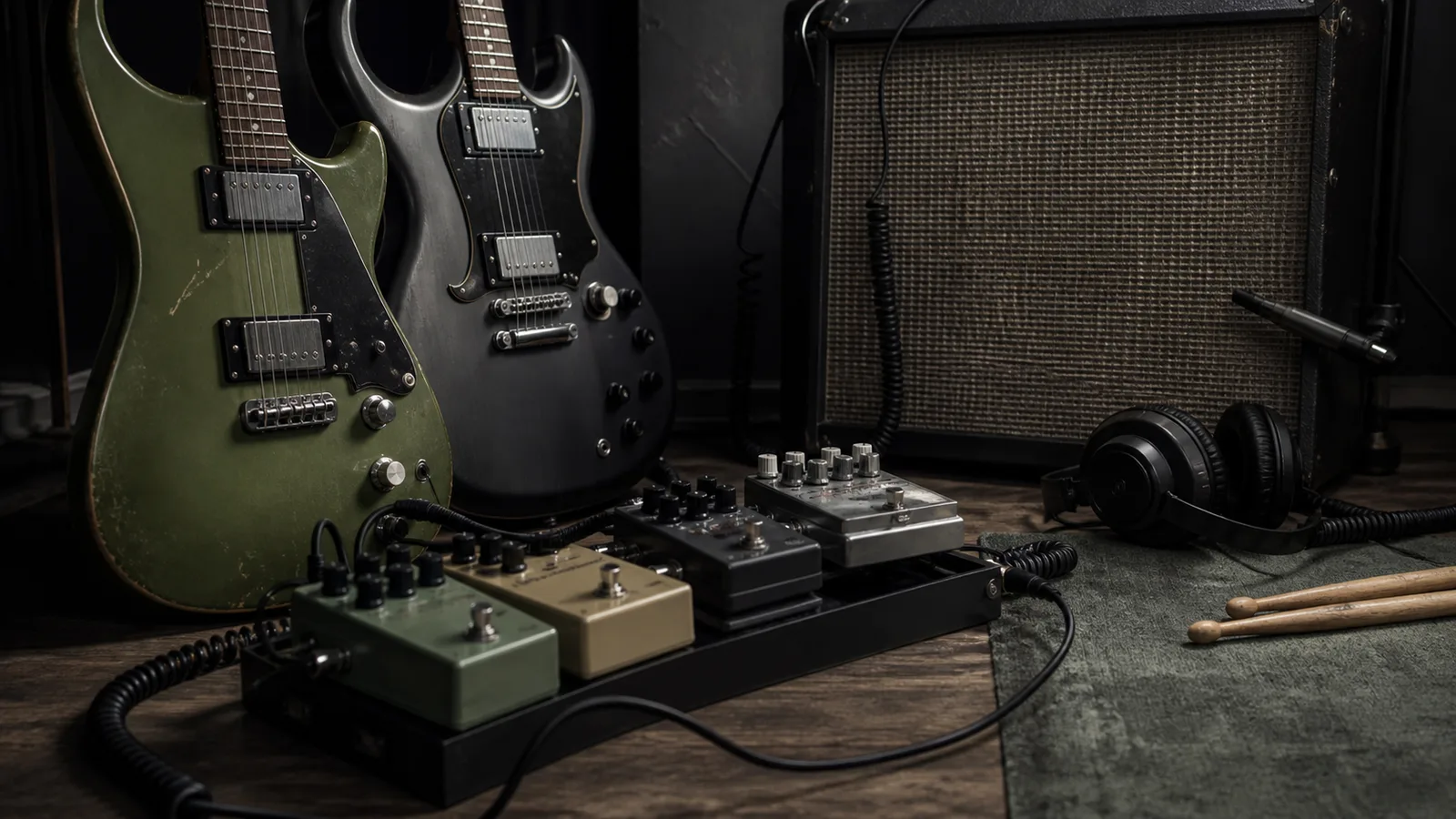
Revise one band decision at a time
Do not rewrite the entire prompt after one weak result. Compare the output with the intended band behavior and change the largest audible mismatch.
- 01
Follow the pulse
Does the drum and bass feel match the intended rock setting?
- 02
Separate the guitars
Can you hear distinct rhythm, texture and lead duties?
- 03
Mark the section lift
Does the chorus change through density, register or rhythm?
- 04
Change one instruction
Keep what works and revise only the biggest mismatch.
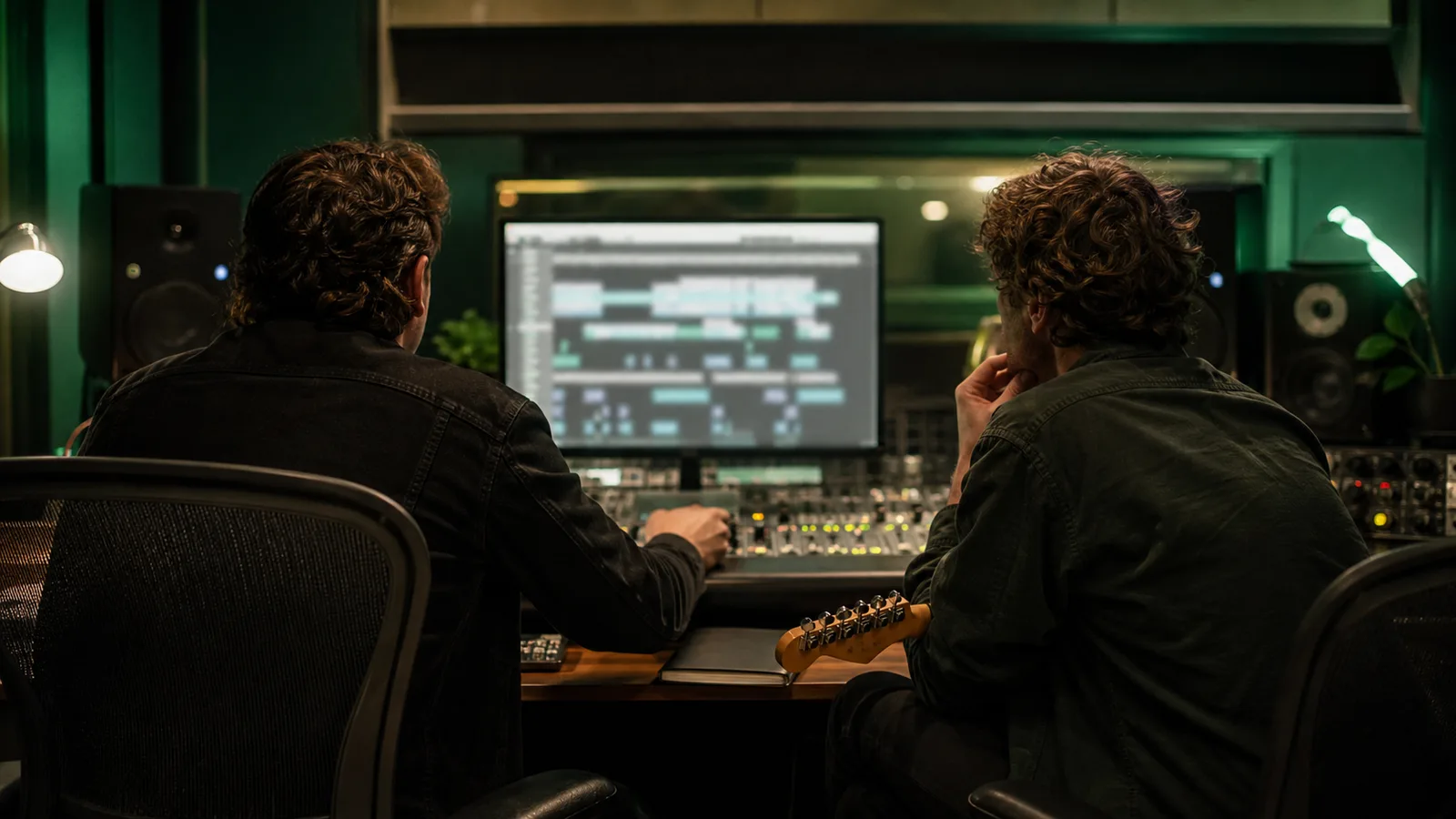
Fix rock generations that sound generic
- Everything sounds like generic arena rock: specify a smaller setting, guitar texture and drum feel.
- The verse is already too large: remove one guitar layer and reserve wide cymbals for the chorus.
- The riff has no pocket: state whether guitar, bass and kick move together or answer one another.
- The lead guitar never stops: give it one response phrase, one solo window and a return to rhythm duty.
- The ending wanders: request a final riff, abrupt stop, ringing chord or deliberate decay.
How this guide was prepared
These prompts were written as original teaching examples around audible band roles, section contrast and endings. They are not copied from generated songs or presented as model benchmarks.
Frequently asked questions
What should an AI rock music prompt include?
Name a rock setting, tempo or feel, guitar texture, rhythm-section roles, section contrast and ending.
Should I mention a specific band?
Describe audible traits instead: guitar tone, groove, vocal delivery, arrangement scale and production character.
How do I make a rock chorus feel larger?
Change one or two concrete elements, such as guitar width, cymbal activity, register or backing voices.
Can these prompts make instrumental rock?
Yes. Remove the vocal direction and give the lead instrument a theme, development window and return.
Related guides
AI Jazz Music Prompts for Swing, Bebop, Fusion and Lounge
Prompt templates for distinct jazz settings, from a brushed trio and bebop combo to electric fusion and a restrained vocal lounge arrangement.
Prompts8 AI Game Music Prompts for Menus, Levels and Battles
A scene-first prompt formula, eight editable examples and a practical in-game listening checklist.
WorkflowsHow to Make AI Music Sound More Human: Practical Fixes
A listening-led workflow for fixing flat dynamics, crowded arrangements, abrupt changes, and repetitive sections.
Try these AI music tools
Start creating