
AI Jazz Music Prompts for Swing, Bebop, Fusion and Lounge
Write clearer AI jazz music prompts with specific ensemble roles, groove, tempo, solo direction and arrangement movement, plus editable examples.
A prompt that says only “jazz” leaves too many decisions unresolved. A quiet piano trio, a fast bebop combo and an electric fusion group share a family name, but not the same rhythm section, lead voice or production character.
Start by choosing the kind of session you want to hear. Then assign jobs to the instruments, describe the pocket, and state how the arrangement should move. The examples below are original editorial templates, not a promise that every generation will follow every cue.
Choose one jazz identity before writing the prompt
Subgenre is the first useful constraint. “Late-night ballad” suggests a different pace and density from “small-combo bebop,” while “jazz fusion” changes the likely bass, keyboard and drum language.
Avoid treating the instrument list as the arrangement. Name who leads, who answers, how the rhythm section supports the soloist, and whether the track ends with a clean tag, a fade or a final ensemble hit.
- Feel and pace: slow ballad, relaxed swing, fast swing, straight-eighth fusion or Latin pulse.
- Ensemble: trio, quartet, horn-led combo, big band or electric group.
- Roles: piano states the theme, bass walks, drums use brushes, saxophone takes the main solo.
- Movement: short head, solo space, trading phrases, return to theme and defined ending.
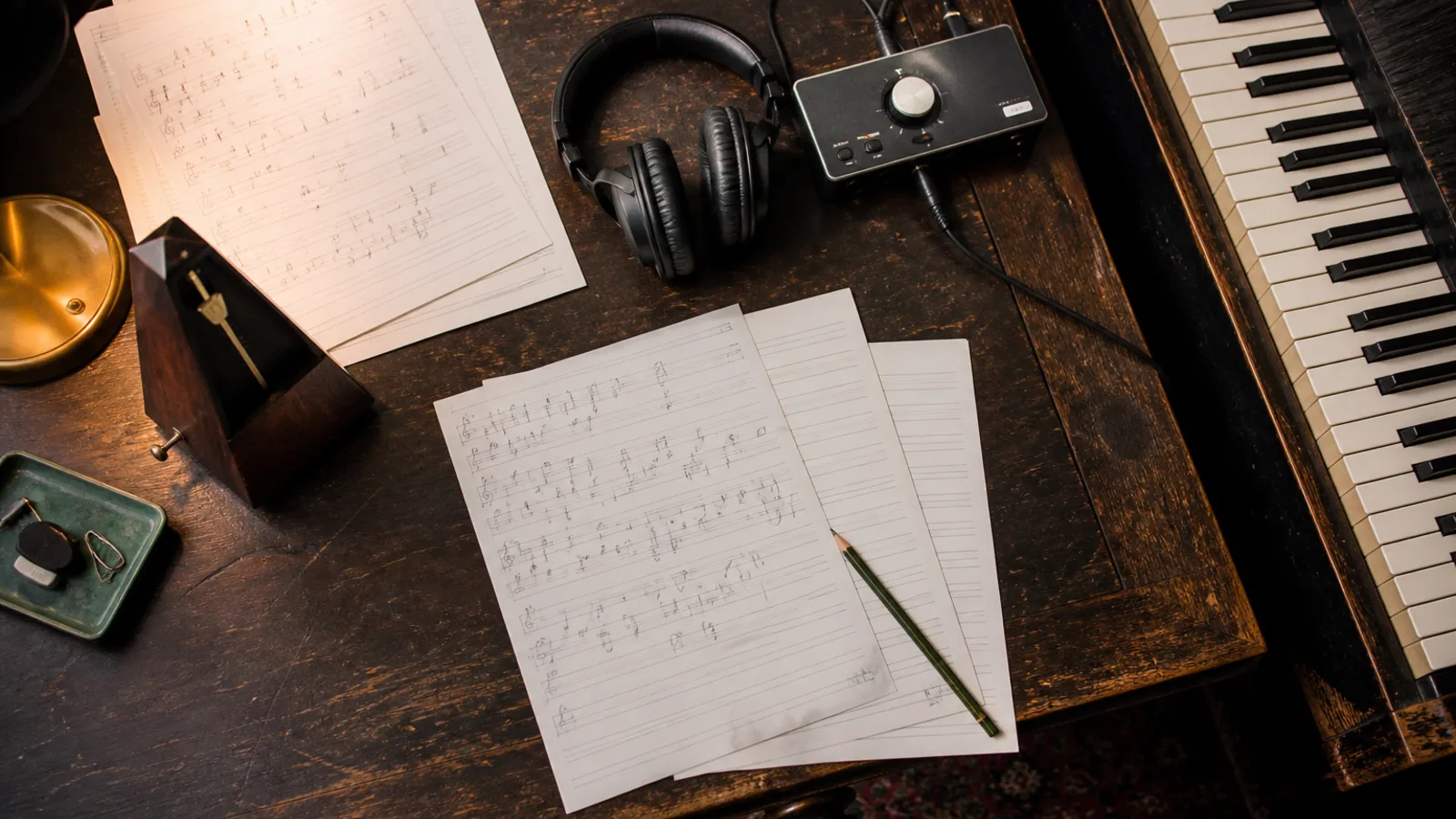
Use a jazz prompt formula that describes musical jobs
A useful jazz prompt moves from identity to behavior. Keep the core short enough to revise, and add only details that you can judge by listening.
Editable AI jazz music prompt examples
Piano trio and ballad
Use space, touch and interaction to separate an intimate trio from generic background jazz.
Piano trio and ballad
1. Intimate piano trio ballad, 62 BPM, warm grand piano states a spare theme, upright bass answers in the gaps, brushed drums stay soft and behind the beat; one restrained piano solo, return to the theme, quiet resolved ending. 2. After-hours jazz waltz, gentle 3/4 pulse, lyrical piano, woody upright bass and light cymbal brushes; melody grows for one chorus, brief bass feature, soft final chord with room ambience. 3. Reflective solo piano jazz, rubato opening moving into a slow pulse, close-miked felt and pedal detail, harmonically rich but uncluttered, no dramatic climax, natural final decay.
Swing and bebop combo
For faster material, define the size of the group and how the solo sections return to the main theme.
Swing and bebop combo
4. Small-combo bebop, fast swing, alto saxophone and trumpet play a tight unison head, walking upright bass, crisp ride cymbal and compact piano comping; short sax solo, trumpet response, head returns, sharp ensemble tag. 5. Mid-tempo tenor sax swing, relaxed pocket, warm tenor lead, piano answers between phrases, bass walks steadily and drums use ride cymbal with light snare accents; two concise solo choruses, clean final hit. 6. Guitar-led hard bop quartet, driving swing, hollow-body guitar theme, punchy piano chords, upright bass and dry drums; blues-shaped solo language, trading four-bar phrases, confident stop ending.
Cool jazz and lounge
Keep the energy restrained, but specify a lead voice and section change so the result does not become static wallpaper.
Cool jazz and lounge
7. Cool jazz quartet, 84 BPM, muted trumpet lead, sparse piano voicings, soft upright bass and brushes; generous pauses, understated trumpet solo, subtle lift in the final theme, close room sound. 8. Late-night lounge jazz, slow-medium swing, breathy tenor sax melody, electric piano, round bass and delicate brushed kit; no crowded solos, one eight-bar sax feature, smooth ending without a dramatic swell. 9. Vocal jazz ballad, intimate low-register lead vocal, piano trio with restrained brushes, conversational phrasing and wide pauses; harmony voices enter only in the final refrain, gentle resolved ending.
Fusion and Latin jazz
State whether the groove is swung or straight, then identify the electric or percussion elements that define the session.
Fusion and Latin jazz
10. Electric jazz fusion, 112 BPM straight-eighth groove, Rhodes chords, syncopated electric bass, tight drums and expressive guitar lead; short keyboard response, controlled build, final section returns to the opening riff. 11. Afro-Cuban jazz quartet, energetic clave-based pulse, piano montuno, upright bass, congas and bright trumpet lead; trumpet and percussion trade short phrases, ensemble break, decisive ending. 12. Brazilian jazz groove, relaxed medium tempo, nylon guitar, warm electric piano, light percussion and melodic bass; flute carries a concise theme, understated solo, airy final cadence.
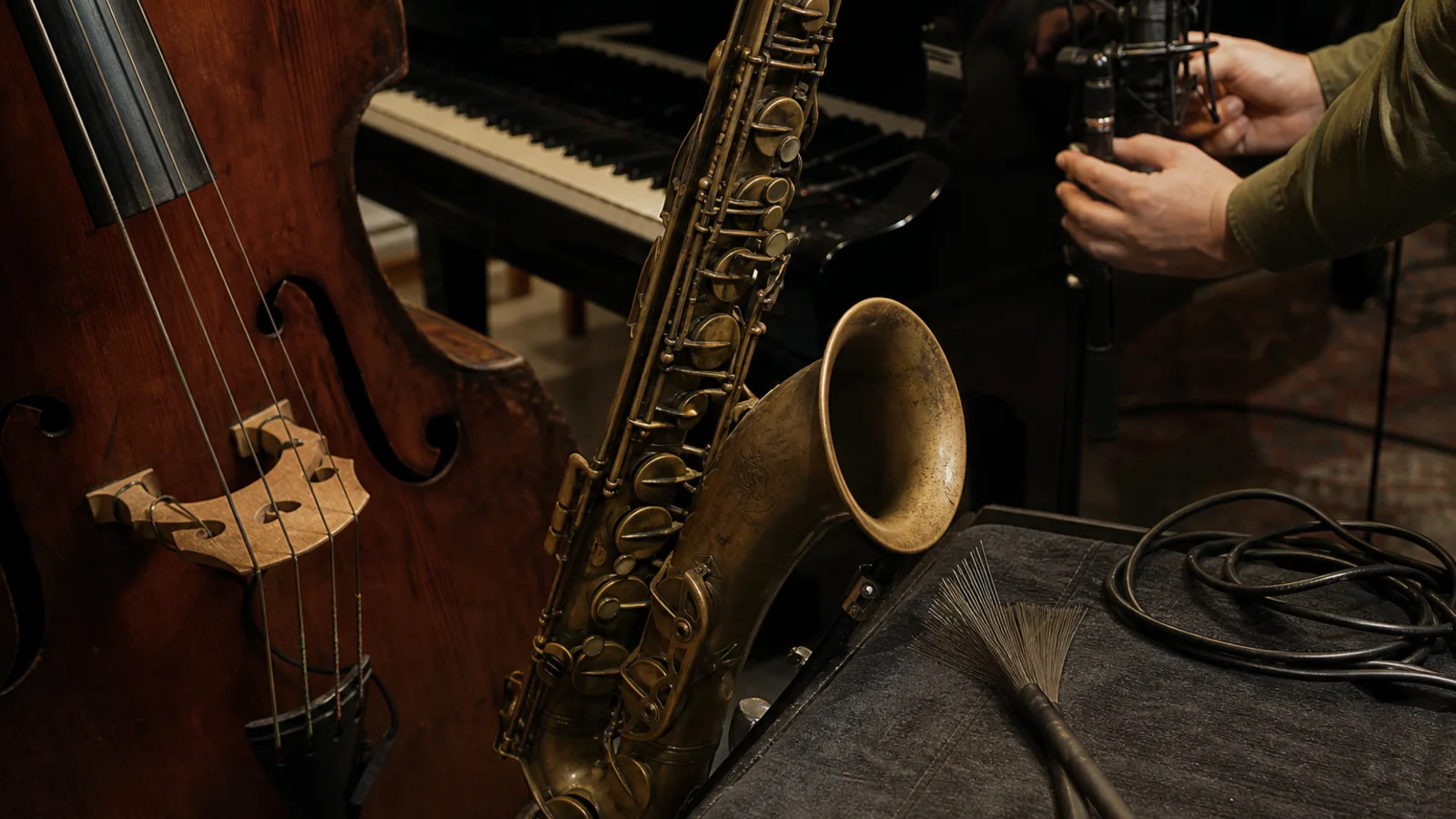
Revise the result like an arrangement
Listen for one structural issue at a time. A different prompt is useful only when you can explain what changed and why the new version fits the intended session better.
- 01
Mark the identity
Can you identify the intended jazz setting within the opening section?
- 02
Follow the rhythm section
Check whether bass, drums and comping instruments have distinct, supportive roles.
- 03
Question the solo space
Notice whether the lead develops and returns, or simply plays continuously over the track.
- 04
Change one instruction
Revise only the largest mismatch—feel, lead, density, movement or ending—then compare again.
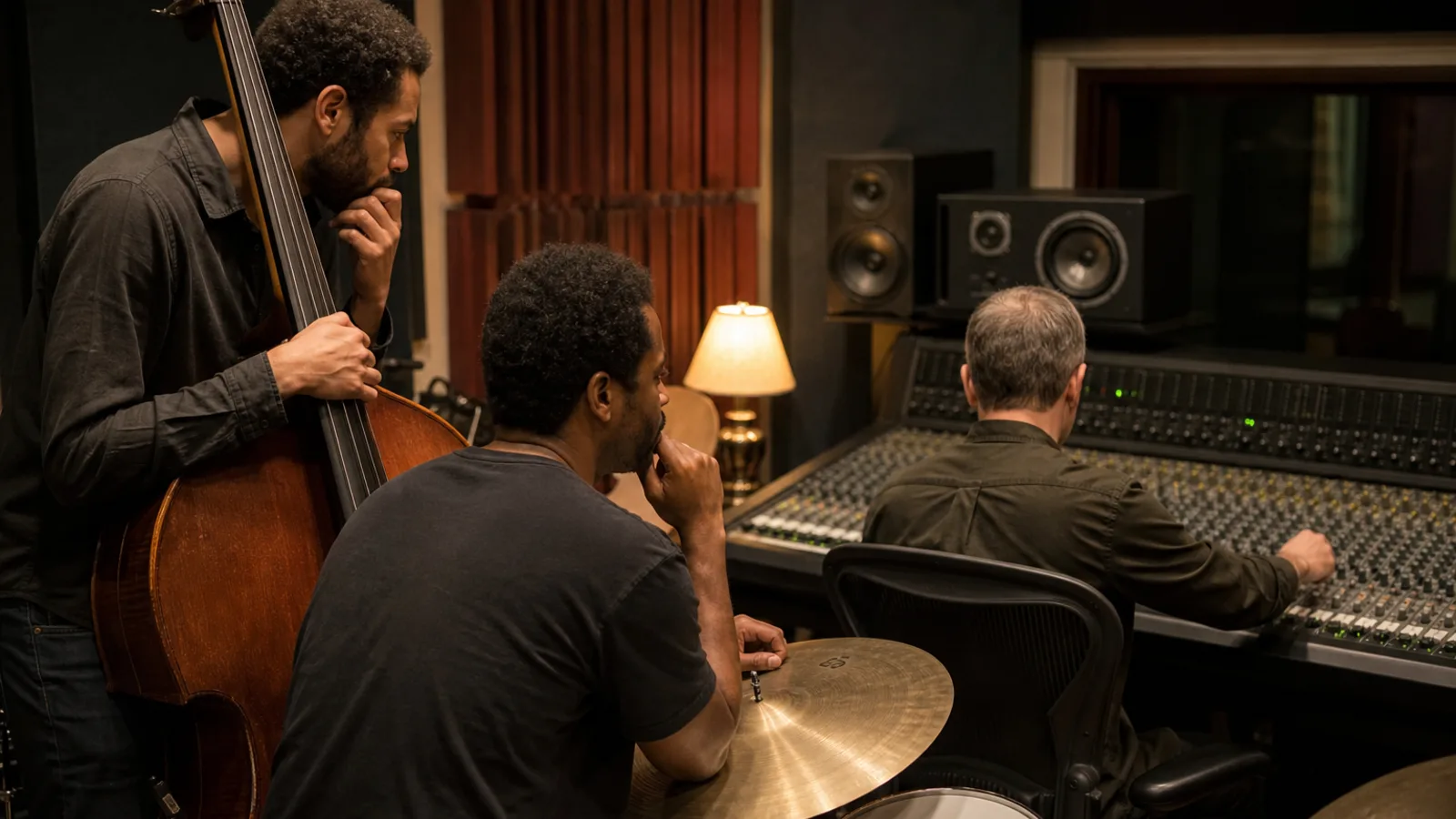
Diagnose a jazz result that feels generic
- It sounds like generic lounge music: replace “jazz” with a subgenre, ensemble and named lead.
- Every instrument plays at once: assign lead, response and support roles.
- The groove feels stiff: state swing versus straight feel and describe the drummer’s job.
- The solo never develops: request a short head, a bounded solo section and a return.
- The ending wanders: ask for a tag, final hit, resolved chord or deliberate fade.
How this guide was prepared
These prompts were written as editable teaching templates from audible choices: feel, ensemble, instrumental roles, section movement and ending. They are not copied from generated songs or presented as benchmark results. Generate, take listening notes and revise against the audio you actually receive.
Frequently asked questions
What should an AI jazz music prompt include?
Name the jazz setting, tempo and feel, ensemble, lead instrument, rhythm-section roles, section movement and ending. Add recording character only when it affects the sound you want.
How do I stop AI jazz from sounding generic?
Replace the broad jazz label with a specific setting and give each important instrument a role. Describe what happens before, during and after the solo.
Should I put BPM in every jazz prompt?
Not always. A clear pace and feel may be enough, but BPM is useful when tempo is central to the intended groove or edit.
Can these prompts be used for instrumental and vocal jazz?
Yes. Most examples are instrumental. For vocal jazz, add the lyric and performance direction, then simplify the accompaniment so the lead has space.
Related guides
AI Rock Music Prompts for Indie, Punk and Alternative Rock
Prompt examples for indie rock, punk, alternative rock and post-rock, with a practical method for revising the arrangement.
Prompts10 AI Cinematic Music Prompts for Film Scenes
Ten editable prompts that turn a scene, dramatic movement and mix needs into a clearer cinematic-music brief.
WorkflowsHow to Make AI Music Sound More Human: Practical Fixes
A listening-led workflow for fixing flat dynamics, crowded arrangements, abrupt changes, and repetitive sections.
Try these AI music tools
Start creating