
12 AI Music Genre Prompts You Can Adapt by Style
Use 12 editable AI music genre prompts for pop, rock, electronic, jazz, cinematic, acoustic, ambient, and rhythmic styles.
Typing ‘cinematic’ is not wrong; it is unfinished. A genre label points to a neighbourhood, but it does not tell you the pace, the lead sound, the drum language, or how the arrangement should move. This reference library supplies those missing decisions. Copy the nearest example, then change only the details you can name and later hear.
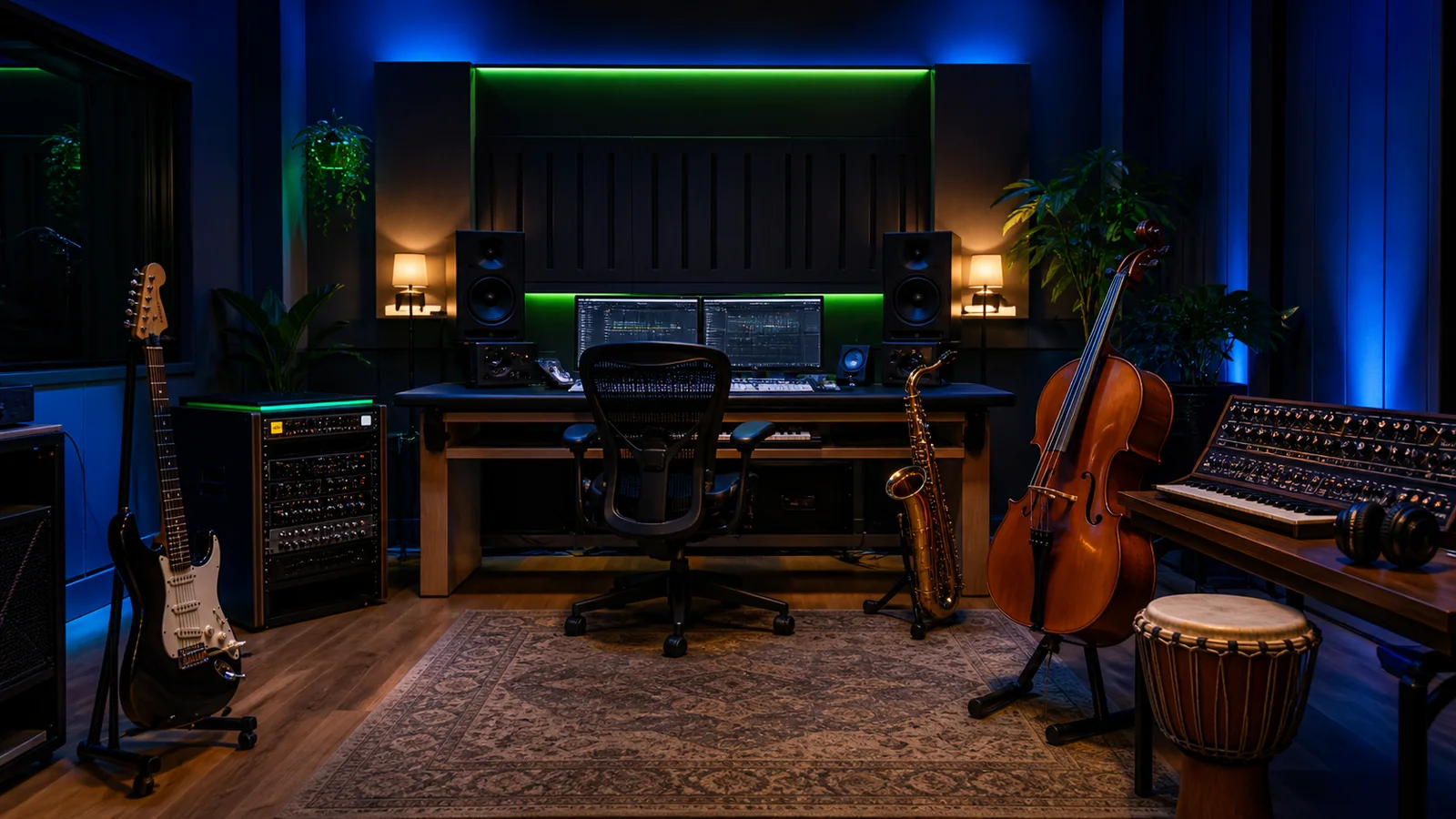
Build the style from audible details
Choose one main genre, then add only the details that define the version you want. If two genre references conflict, explain which element comes from each instead of joining labels with a slash.
12 AI music genre prompt examples
Pop, rock, and soul
Examples 1–3
1. Bright indie pop at 112 BPM, clean guitar arpeggios, warm synth bass, tight live-style drums, short verses and a wider chorus, restrained bridge, clean final hit. 2. Driving alternative rock around 128 BPM, palm-muted guitar in the verse, open distorted chords in the chorus, active bass, punchy acoustic drums, brief half-time breakdown before the final chorus. 3. Relaxed neo-soul at 86 BPM, soft electric piano, round bass, dry rim-click groove, sparse guitar answers, intimate verse and richer chord voicings in the chorus.
Electronic, dance, and lo-fi
Examples 4–6
4. Melodic house at 122 BPM, steady four-on-the-floor kick, warm side-chained pads, simple plucked synth motif, filtered eight-bar build, open but controlled drop, smooth outro. 5. Dark synthwave at 104 BPM, pulsing analog bass, gated snare, wide retro pads, restrained arpeggio, gradual tension into a larger final section, no vocals. 6. Dusty lo-fi hip-hop at 78 BPM, soft kick and snare, muted electric piano chords, small bass movement, subtle room texture, eight-bar variation without a dramatic drop.
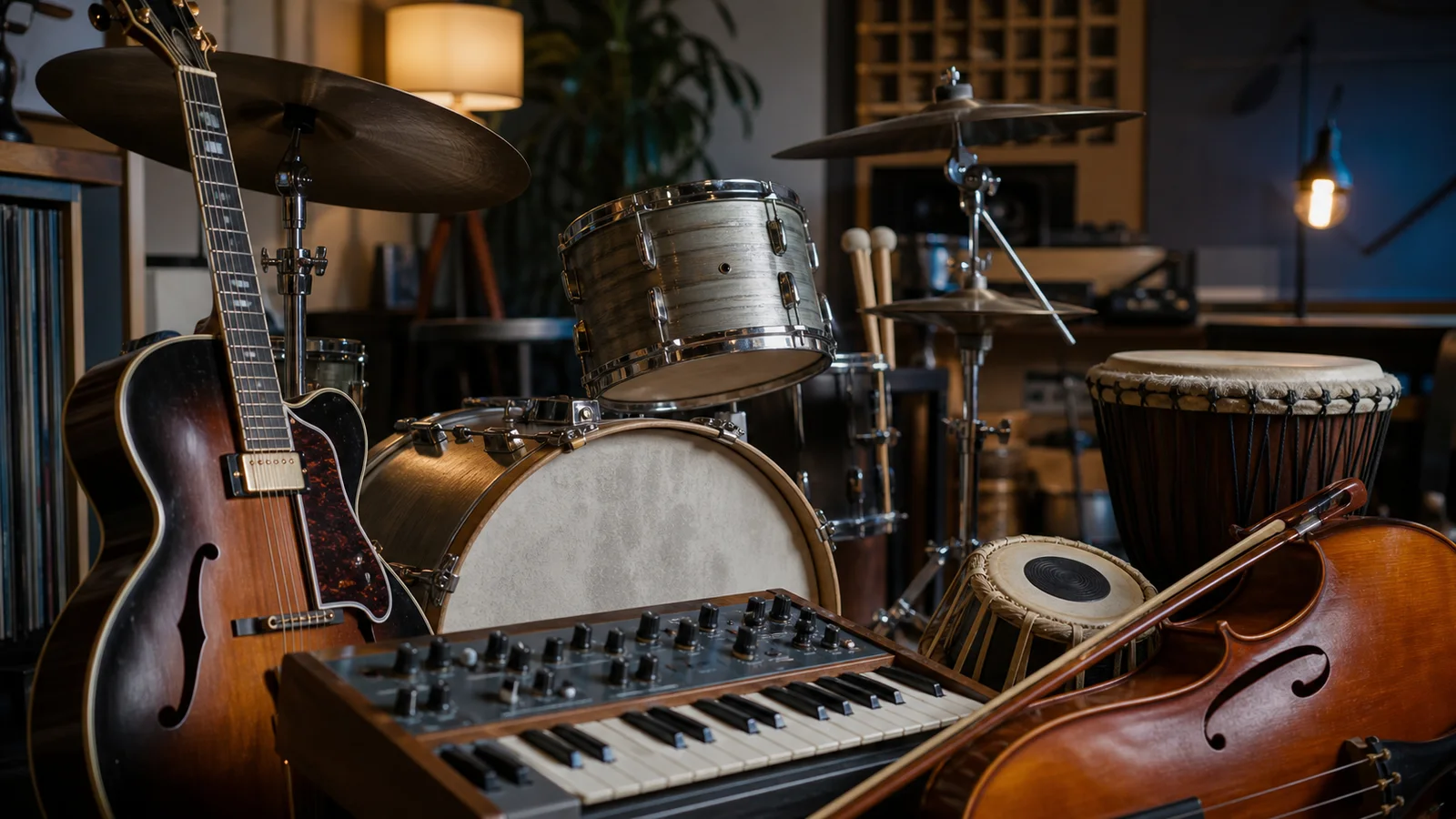
Jazz, acoustic, and percussion-led
Examples 7–9
7. Late-night jazz quartet at 92 BPM, brushed drums, upright bass walking lightly, warm piano comping, tenor saxophone lead with pauses, short trading phrases, quiet resolved ending. 8. Intimate acoustic folk at 96 BPM, fingerpicked guitar, soft upright bass, light shaker, small mandolin accents in the chorus, natural room sound, understated ending. 9. Percussion-led global groove at 108 BPM, hand drums in interlocking patterns, warm bass, short wooden-flute motif, sparse chords, gradual layering and a clean loop-friendly middle.
Cinematic, ambient, and chamber
Examples 10–12
10. Restrained cinematic tension at 72 BPM, low strings, soft piano pulses, distant percussion, slow harmonic rise, no oversized trailer hits, unresolved final chord. 11. Airy ambient soundscape with no fixed beat, warm evolving pads, occasional piano harmonics, low movement, long transitions, no bright lead, slow fade into silence. 12. Modern chamber piece at 80 BPM, cello ostinato, muted piano, small string ensemble, alternating short and long phrases, gradual dynamic arc, delicate final cadence.
Adapt a prompt without losing the genre
Keep the defining groove and two or three core instruments fixed. Change the purpose, energy, density, or section shape one at a time. This produces a useful variation without turning the prompt into a different brief.
- Choose the closest example: Start with the rhythm and instrument family that match your idea.
- Set the role: Decide whether the track supports a scene, carries a song, or stays in the background.
- Change one identity marker: Swap tempo, lead instrument, drum character, or section movement—not all of them.
- Listen for the genre anchor: Check whether the groove and core sound remain recognizable after the change.
A complete house-prompt adaptation
This is a full adaptation rather than a one-variable experiment. Tempo, kick pattern, and side-chained pads hold the melodic-house identity while the lead colour, build, and ending change together. Use the later listening test when you want to isolate one variable.
Reference version
Melodic house at 122 BPM, steady four-on-the-floor kick, warm side-chained pads, simple plucked-synth motif, filtered eight-bar build, open but controlled drop, smooth outro.
Late-night variation
Late-night melodic house at 122 BPM. Keep the four-on-the-floor kick and warm side-chained pads; replace the bright pluck with a muted glassy motif, shorten the filtered build to four bars, hold the bass pattern steady, and end with drums and pad only.
Listen to a complete house adaptation
Both prompts keep the 122 BPM melodic-house anchor. Version B intentionally makes a complete adaptation by changing the lead colour, build length, bass instruction, and ending while preserving the kick and pads. It is not the single-variable test described later in the guide.
Generated in Sonus on August 6, 2026 with ACE-Step (the result cards display V1.5) in instrumental mode. The localized example above explains the same adaptation; the player shows the exact compact English prompts submitted for these recordings. The standard-quality files were converted to 96 kbps MP3 for web playback; the music itself was not edited.
A
Pulse Of The Afterglow
Play the generated result
View the exact submitted prompt
Melodic house at 122 BPM, four-on-floor kick, warm side-chained pads, plucked-synth motif, eight-bar filtered build, controlled drop, smooth outro.
What the generation record shows
Sonus titled this result “Pulse Of The Afterglow”. Its generated tags stayed within melodic, deep, and progressive house, with electronic, dance, chillout, and atmospheric references.
B
Pulse Through The Glass
Play the generated result
View the exact submitted prompt
Late-night melodic house, 122 BPM. Keep four-on-floor kick and warm side-chained pads; use a muted glassy motif, four-bar filtered build, steady bass, and end with drums and pad only.
What the generation record shows
Sonus titled this result “Pulse Through The Glass”. Its generated tags also stayed within melodic, deep, and progressive house. Use the player—not the tags—to judge the glassy motif, shorter build, and drums-and-pad ending.
Common genre-prompt mistakes
- Stacking several unrelated genres without assigning their roles.
- Naming a mood but leaving out tempo, groove, and instruments.
- Using a famous artist or song as the whole prompt instead of describing audible traits.
- Adding every production adjective at once, leaving no clear priority.
Run a simple style test
How these prompt examples were prepared
The 12 prompts are original editorial templates assembled from audible controls such as tempo, groove, instrumentation, section movement, and ending. They are not a ranking of genres or model test results. Treat the nearest example as a draft, change one identity marker, and evaluate the audio produced in your own session.
Frequently asked questions
How many genres should one AI music prompt include?
One main genre is the clearest starting point. If you blend two, state which rhythm, instrument, or production trait comes from each.
Should a genre prompt include BPM?
BPM can clarify pace when the number matters, but a tempo range or musical description can also work. Treat it as one control, not a guarantee.
Can I name an artist in a genre prompt?
A more transferable approach is to describe the audible traits you need—instrumentation, groove, era, dynamics, and production character—without relying on a person’s name.
Why did my revision lose the original style?
You may have changed too many identity markers together. Restore the groove and core instruments, then test one new variable.
Related guides
How to Make AI Music from a Text Prompt
A practical walkthrough for describing the style, mood, instruments, tempo, and structure you want before generating music.
Prompts30 AI Instrumental Music Prompt Examples by Use Case
A broad prompt library for creating music without vocals, with a reusable formula for controlling mood, instruments, pace, and arrangement.
Prompts20 Background Music Prompt Examples for Videos
Video-focused prompts designed around narration space, edit points, pacing, and a clear arrangement arc.
Try these AI music tools
Start creating