
12 AI Podcast Intro Music Prompts for Intros, Outros, and Transitions
Use 12 practical AI podcast music prompts for intros, outros, and transitions, with a clear formula for duration, voice-over space, instrumentation, and endings.
A useful podcast intro does not need to be long or complicated. It needs a recognizable motif, enough space for the host’s voice, and an ending that is easy to edit. The prompts below describe duration, mood, instruments, tempo, narration needs, and the final beat so you can generate a more practical first version.
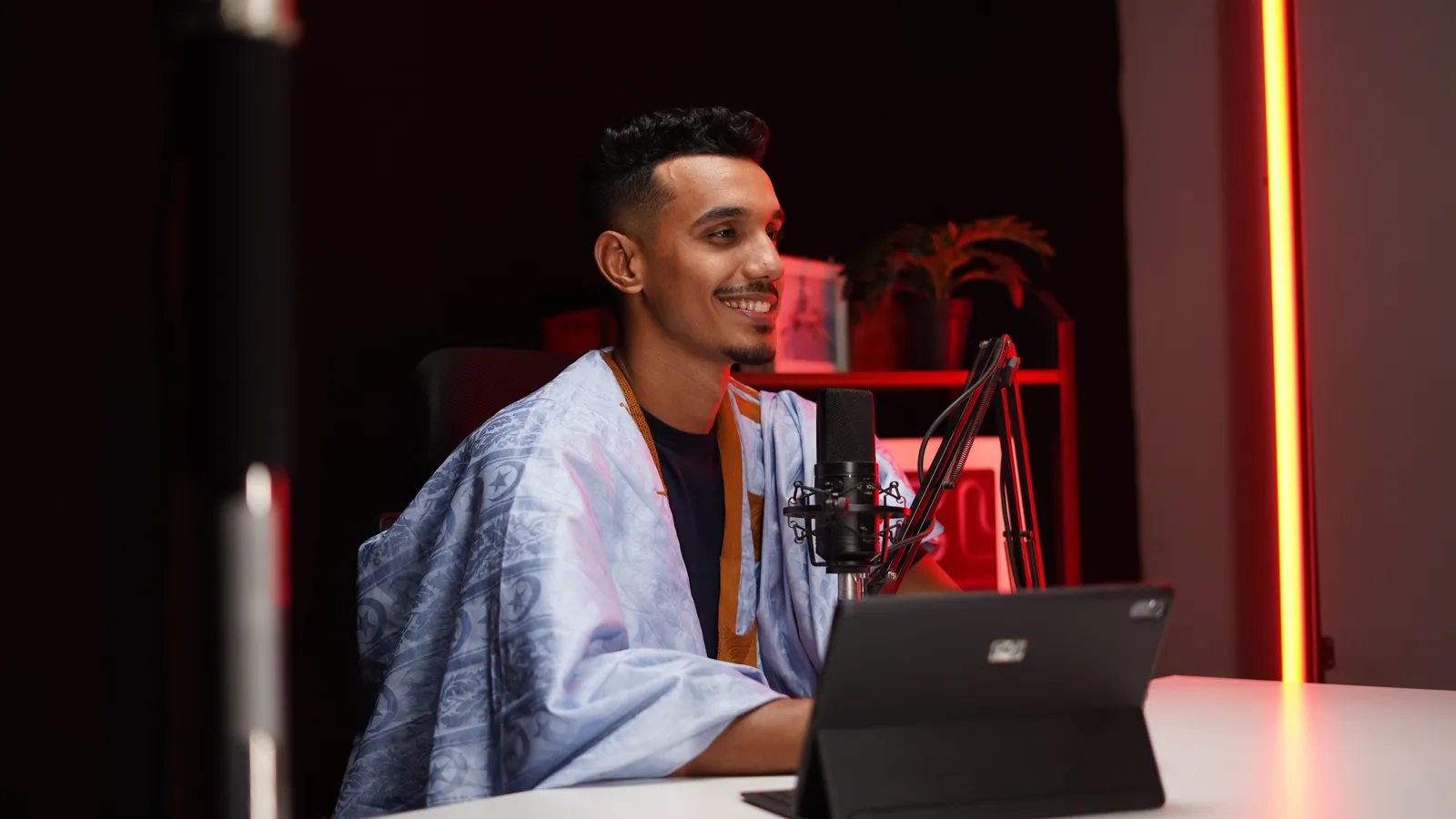
What podcast intro music needs to do
The role of the music changes across an episode. Define that role before choosing a genre. An opening theme can establish identity, while a transition bumper should simply separate two segments without slowing the conversation.
- Intro: establish the show’s tone and create a recognizable opening within roughly 5–15 seconds.
- Music bed: sit quietly under a spoken introduction without a dense lead melody.
- Transition: signal a new chapter, sponsor message, or format change in 2–5 seconds.
- Outro: reuse the main motif, feel more resolved, and leave room for credits or a call to action.
A reusable AI podcast music prompt formula
12 podcast intro music prompt examples
Business and technology podcasts
Examples 1–3
1. Ten-second technology news podcast opener, modern electronic, confident and clear, muted synth pulse, warm bass and precise percussion, 112 BPM, immediate three-note motif, clean final stop, instrumental, no vocals. 2. Twelve-second business interview intro, warm corporate indie, credible and welcoming, muted electric guitar, soft synth plucks and light drums, medium tempo, leave the final two seconds sparse for the host’s voice, instrumental. 3. Eight-second finance briefing opener, minimal marimba electronic, focused and calm, marimba pulse, clean bass and restrained click percussion, 100 BPM, short repeatable motif and decisive ending, no vocals.
Education, interview, and documentary podcasts
Examples 4–6
4. Ten-second science explainer podcast intro, curious acoustic electronic, marimba, soft synth and light hand percussion, 105 BPM, gentle rise followed by a clean fade under narration, instrumental. 5. Eight-second long-form interview opener, intimate neoclassical, felt piano and subtle cello, thoughtful and human, low dynamics, simple motif with no dramatic hit, instrumental, no vocals. 6. Twelve-second history podcast theme, restrained cinematic folk, low strings, frame drum and wooden flute, serious but not ominous, steady mid-slow pulse, clear final tail for the episode title.
Lifestyle, wellness, and narrative podcasts
Examples 7–9
7. Ten-second travel podcast opener, bright indie folk, open and adventurous, acoustic guitar, hand percussion and light strings, 118 BPM, quick hook and clean ending, instrumental. 8. Twelve-second wellness podcast intro, calm ambient, reassuring and spacious, soft pads, gentle piano and a subtle pulse, 72 BPM, no sharp transients, fade smoothly beneath the host’s first sentence. 9. Ten-second true-story podcast opener, reflective cinematic ambient, intimate piano, soft room texture and restrained strings, gradual emotional lift without a trailer-style impact, instrumental, no vocals.
Outros, chapter breaks, and sponsor transitions
Examples 10–12
10. Three-second chapter transition using the same three-note motif as the intro, one soft percussion accent, compact and neutral, no melody tail, instrumental. 11. Fifteen-second podcast outro that reprises the intro motif with a wider arrangement, warm bass, light drums and soft strings, gentle resolution, leave the last four seconds suitable for spoken credits, fade naturally. 12. Five-second sponsor transition, warm minimal electronic, muted pluck, soft snap and rounded bass, neutral energy, no lead melody, clear start and stop, instrumental, no vocals.
How to customize a podcast music prompt
- 01
Map the spoken opening
Write down when the host starts speaking, how many seconds of music play alone, and where the intro must end.
- 02
Choose one sonic identity
Use one genre direction, two or three core instruments, and a mood that matches the show rather than the topic of one episode.
- 03
Generate and compare
Create several versions from the same core prompt. Compare the motif, voice-over space, pacing, and final edit point.
- 04
Refine one mismatch
Adjust only duration, density, tempo, instrumentation, or ending, then compare again at a similar listening level.
Common podcast music prompt mistakes
- Requesting a full song when the edit only needs a short identity cue.
- Using a dense lead melody beneath continuous narration.
- Forgetting to specify a clean stop, fade, or space for spoken credits.
Frequently asked questions
How long should podcast intro music be?
Many intros work within roughly 5–15 seconds, but the right length depends on the spoken opening and format. Define the edit point in the prompt instead of generating a long track and hoping it fits.
Should podcast intro music have vocals?
Usually not when the host speaks over the opening. Instrumental music reduces competition with speech, though a separate sung jingle can work when it is an intentional part of the show format.
Can the intro and outro use the same music?
Yes. Reusing the same motif creates continuity. The outro can use a wider or calmer arrangement and leave more room for credits or a call to action.
Related guides
30 AI Instrumental Music Prompt Examples by Use Case
A broad prompt library for creating music without vocals, with a reusable formula for controlling mood, instruments, pace, and arrangement.
WorkflowsHow to Write AI Music Prompts Without Vocals
A focused workflow for getting instrumental results without conflicting lyric or singer instructions.
Prompts20 Background Music Prompt Examples for Videos
Video-focused prompts designed around narration space, edit points, pacing, and a clear arrangement arc.
Try these AI music tools
Start creating